

Food marketing, whether meal kits or specialty products, has a visibility problem. The publishers driving conversions are generating 1.65× more sales than brands can track. Not because the influence isn’t real, but because the entire research journey now happens inside AI tools that don’t generate affiliate clicks.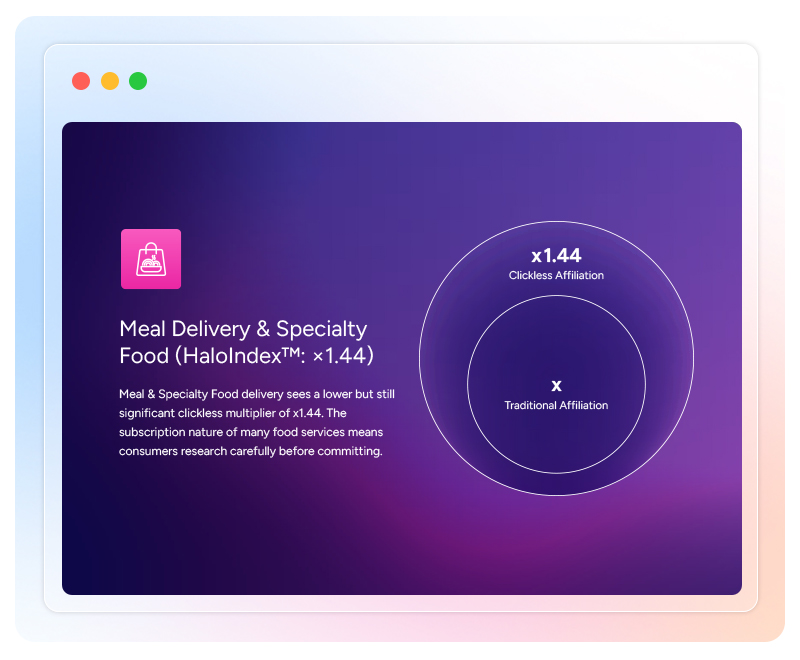
When someone searches Google and asks “What’s the best meal kit for busy professionals,” or “Where do I get gluten-free pasta that tastes good?” they’ll receive an AI summary with recommendations synthesizing content from publishers like Bon Appétit and Food & Wine. If they like what they see. The consumer reads it,and may decide to subscribe to ClickUnity.
Unfortunately, because the content was served up by AI, they didn’t click a link, and the publishers that shaped their decision don’t receive credit. Worse yet, the brands never know the publisher drove the sale.
Why Food Purchases are Driven by AI Research
Food products are an incredibly personalized category, and purchases are based on an individual’s tastes, dietary needs, health restrictions, and more.
Premium pricing demands validation. A $300/month meal kit subscription or $15 artisanal olive oil aren’t impulse buys. Consumers need assurance that the price premium delivers value. They want someone to confirm they’re making the right choice. AI aggregates publisher expertise into trustworthy recommendations synthesizing multiple reviews.
Dietary and lifestyle compatibility drives research. “Does this meal service accommodate my allergies?” “Is this pasta actually keto-friendly?” “Will the delivery schedule work with my travel?” Consumers have specific use-case questions that require editorial context, and publishers are there to provide it.
Discovery starts with problem-solving. Food purchases often begin with a specific need, like: “meal kit with authentic international recipes” or “organic baby food without added sugars.” These queries generate AI-synthesized answers pulling from relevant publisher taste tests and reviews.
AI Tools & Their Usage
The shift to AI-powered product discovery is already a dominant research channel for food purchases.
ChatGPT commands 85-90% market share in GenAI-assisted shopping journeys, with Perplexity emerging at 5-10%. Meanwhile, Google’s AI Overviews now synthesize publisher content directly into search results. 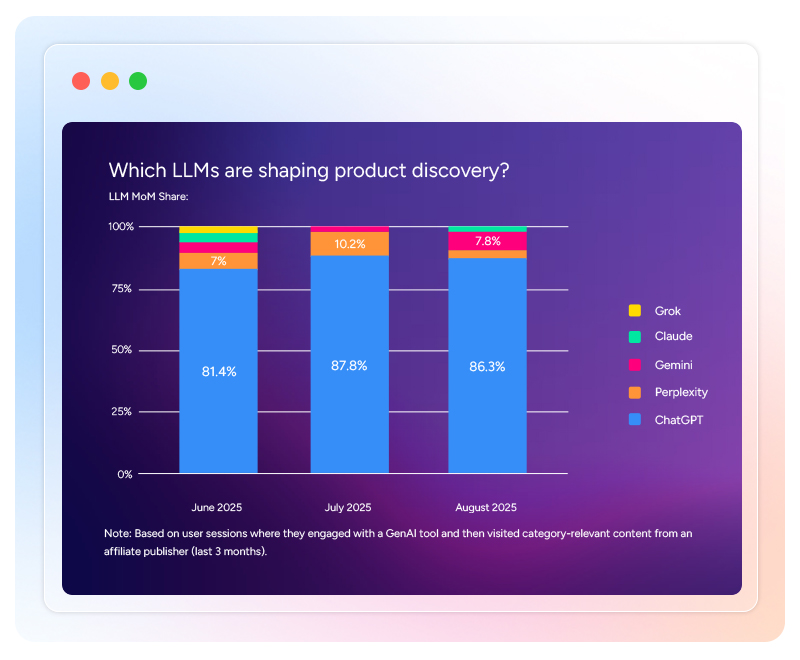
The Publishers Building Purchase Confidence
Five publishers dominate food clickless influence.
- Bon Appétit – Culinary credibility and taste authority
- DeliveryRank – Meal delivery service comparisons
- CNET – Price analysis and value breakdowns
- Food & Wine – Editorial taste testing across categories
Reviewed – Product testing methodology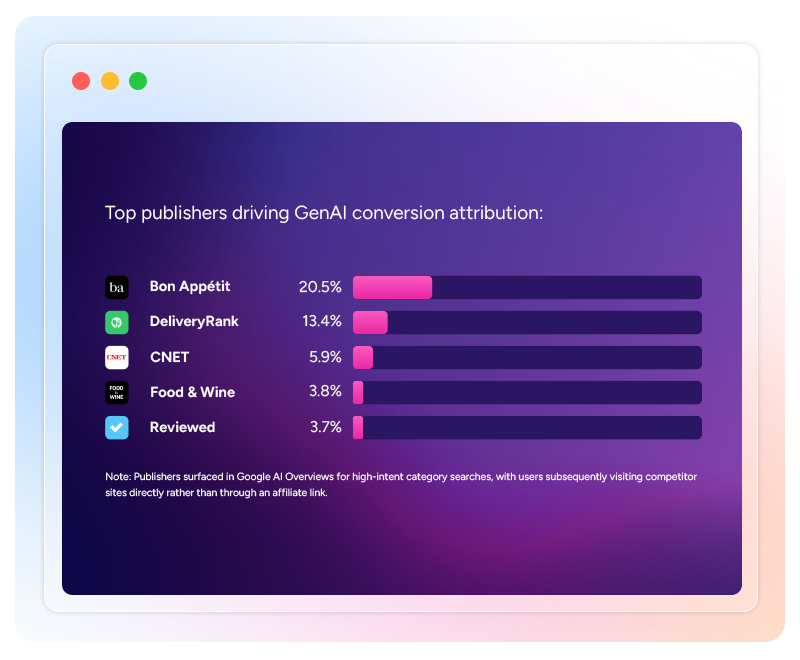
These are some of the publishers consumers trust most to validate their food purchases. But with last-click tracking the legacy conversion attribution model for most advertisers, compensation models treat them like bottom-funnel converters.
The Brands Losing Measurement Visibility
CookUnity, Factor 75, Home Chef, HelloFresh, and Blue Apron capture the highest share of clickless conversions in meal delivery.
The 1.65× multiplier means both speciality food brands are making partnership budget decisions based on 38% of actual publisher influence. The other 62% is the invisible influence that traditional last-click tracking models are blind to.
How to Move Forward: Brands & Publishers
For brands: If you’re selling meal delivery kits or speciality products, your premium food publishers aren’t underperforming; your measurement is. The partners creating comprehensive taste tests, dietary breakdowns, and service comparisons are driving conversions at nearly double the rate your analytics show. Budget allocation based on last-click data is optimizing for a little over half of your publishers’ influence.
For publishers: You’re subsidizing brand revenue. Every meal kit review, taste test, and dietary recommendation you publish drives purchases your partnership agreements don’t account for. The research and tools now exist to quantify this gap and negotiate based on actual influence.
Methodology Note
This analysis comes from the 2025 Clickless Affiliation™ Index Report, measuring consumer journeys across 187 brands in six retail categories. VantagePoint™ technology tracks how publisher content surfaces in AI-generated search results and drives conversions beyond traditional click-through attribution.
Access complete publisher rankings, brand performance benchmarks, and strategic partnership frameworks in the full report right here. Or, try our interactive demo today → VantagePoint™ On-Demand Demo