

It is now 2026. And thanks to AI, the entire affiliate marketing landscape has shifted right under our feet. If you don’t have a handle on the latest tech, you’re likely just leaving money on the table.
Lately, the conversations I am having with affiliate marketers is about survival and efficiency. We are realizing that our old “set it and forget it” tool suites are quickly becoming a recipe for missed opportunities.
If you are currently looking for new affiliate solutions this year, forget doing a deep dive on the new affiliate platform features list for a moment. Instead, you need to ask if the platform you choose can actually solve these three new problems.
1. The Zero Click Black Hole
This is the biggest headache we all face right now.
Think about how you use the internet today. You ask a search engine or an AI tool a question, and it gives you the answer right then and there. You no longer need to click through ten different links to find your answer. You get the recommendation and you buy.
The problem is that traditional affiliate platforms were built for a world where everyone clicked everything. They rely on that linear path of “click then buy” to award a commission to the publisher.
In this new zero click reality, your partners are still doing the work. However, they aren’t being compensated properly for it. If the conversion happens later through a direct search or because the user got the answer from an AI summary, a legacy platform will tell you that your partners contributed nothing to that sale.
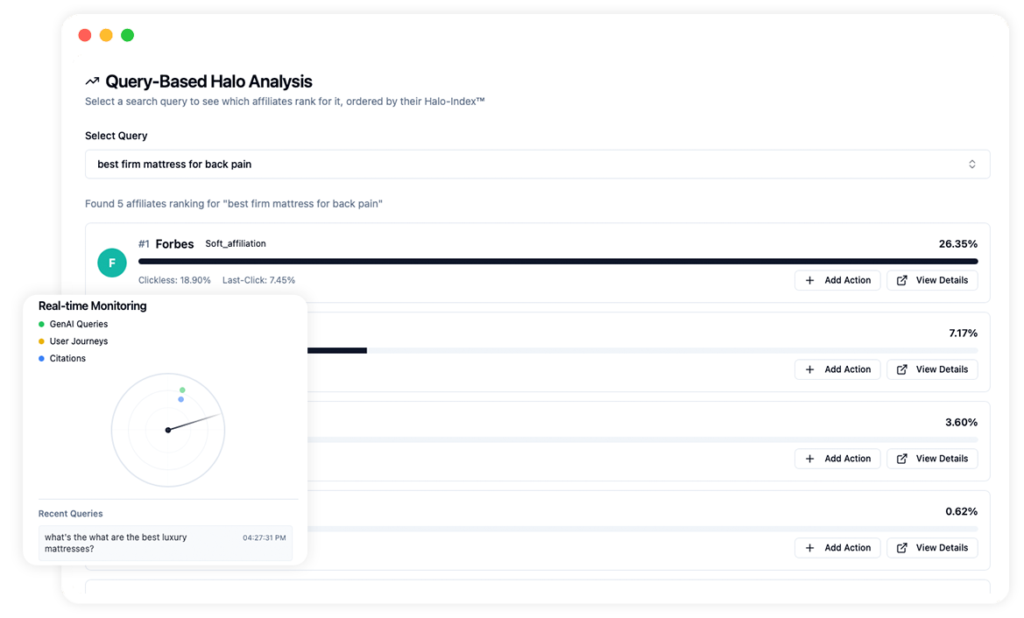
You need a platform that understands influence and incrementality. You need technology that uses AI to look at the data and tell you which partners are actually driving new value even if the traditional click path looks messy. If your platform cannot measure influence beyond the last click, you are going to cut off your best partners because you simply cannot see their value. This is exactly why we built VantagePoint to serve as the industry’s first attribution solution for this new machine-mediated market. It gives you the visibility you need to finally see and credit the zero click influence that is actually driving your revenue.
2. The Invisible Data Crisis
We need to have an honest conversation about your data accuracy because the reality is terrifying.
You might look at your dashboard and see a thousand sales, but you are likely missing nearly half of the actual picture.
We are living in a world dominated by Intelligent Tracking Prevention and aggressive browser privacy updates. Apple, Google, and Firefox have all clamped down on how data is shared. The result is that traditional tracking methods like third-party cookies and simple pixels are being blocked by default.
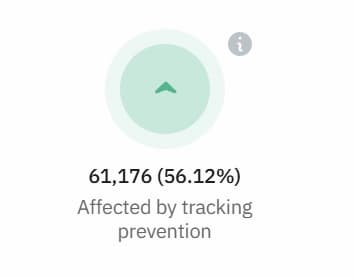
Current industry data suggests that nearly 55% of all affiliate clicks are now unable to be tracked effectively using legacy methods.
Think about what that means for your budget. You have partners who are driving sales for you, but because they came from a Safari browser or a protected mobile device, your system marks them as organic. You aren’t paying your partners for those sales, which means they will eventually stop promoting you. Even worse is that you are making huge budget decisions based on data that is fifty percent incomplete.
The solution is to stop relying on the user’s browser to do the tracking for you.
You need a platform that prioritizes Server-to-Server tracking. This method creates a direct line of communication between your server and your partner platform, completely bypassing the browser’s privacy blocks. At Partnerize, we built our entire infrastructure around this first-party tracking approach to ensure you capture 100% of your conversions rather than just the ones the browsers let you see.
3. The “Blunt Force” Spending Trap
We need to stop treating every single sale like it is worth the exact same amount to your business.
In the old days of affiliate marketing, we accepted a very blunt model. We would agree to pay a publisher a flat 5% commission on any sale they generated. It did not matter if they sold a full price luxury item with a huge margin or a clearance item that we were actually losing money on. We paid the same 5% fee regardless.
That is a “blunt force” approach and in 2026 it is a reckless way to manage a budget.
CFOs are scrutinizing marketing spend more than ever before. They want to know why you are paying high commissions for low value customers or low margin products.
The problem is that legacy platforms are too rigid. They lock you into these flat structures because their technology cannot read the details of the shopping cart. They see a “sale” and they bill you.
You need to move to a platform that offers Dynamic Commissioning.
This is a precise way of spending where your commission rates automatically adjust based on the quality of the sale. You can set rules to pay a higher commission for a new customer and a lower one for a returning customer. You can pay more for high margin SKUs and zero for low margin items.
At Partnerize, we built our commissioning engine to read the actual order metadata in real time. This means you stop wasting budget on empty calories and start using your commission structure to incentivize the exact outcomes your business needs.
The Bottom Line
When you evaluate your tech stack this year, look beyond the feature lists. You need a platform that secures your data against privacy blocks and aligns your commissions with your actual profit margins. If you solve for accuracy and precision first, the revenue growth will inevitably follow.
Ready to see how we solve these specific challenges for the world’s leading brands? Request a demo of the Partnerize platform today.