









The brand presence your customers experience today exists in highly dynamic digital spaces that no one on your team has ever visited.
A creator recorded an unboxing video in Manila last Tuesday. An editorial publisher embedded an expired promotional code into a high-traffic review page hidden deep within a major lifestyle site. In those isolated digital environments, each of these placements functions as the definitive face of your enterprise. They carry your tone, your product claims, and your explicit legal compliance standards into rooms you will never personally enter.
The systemic challenge is a structural handoff: you signed the creative brief, and then you had to step back. The partner built the layout, and the placement went live. However, in the critical weeks between that initial launch and your next quarterly review, the reality on the ground inevitably shifts.
This is the brand integrity gap—and it widens exponentially with every partner you add to your ecosystem. A larger, high-velocity program naturally creates a massive, fragmented operational surface area. No internal team, regardless of headcount, can manually monitor it in real time.
The Failure of Passive Sampling
Historically, tracking this execution gap meant relying on manual audits or passive spot-checking. But random sampling is a legacy framework that treats compliance as a retrospective exercise. It only catches errors after the damage to your brand equity or regulatory status has already occurred.
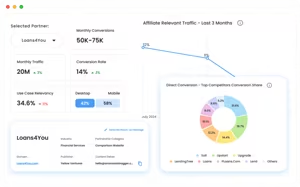
AI Placement Verification was engineered for this exact operational vulnerability. Instead of relying on passive sampling, it establishes an automated, continuous layer of oversight. The system actively captures every live placement exactly as a consumer sees it, then systematically programmatically matches the published content against your original guidelines.
When positioning drifts, when product claims get exaggerated, or when required regulatory disclosures disappear, the system flags the variance within hours—not at the next compliance audit weeks down the line. It transforms brand safety from a manual game of catch-up into a programmatic science.
The Strategic Stakes: A Vertical Breakdown
While the economic risk of a fragmented brand narrative is constant, the strategic stakes vary sharply by vertical:
- For Regulated Categories (like Financial Services): This automated infrastructure is the line between a minor, self-contained copy update and a catastrophic regulatory penalty. When automated compliance safeguards your disclosures, you eliminate the legal liability born from manual partner oversight.
- For Luxury and Premium Retail: It is the operational lever that prevents a highly curated brand presence from dissolving into a fragmented, heavily discounted channel. By ensuring promotional guardrails are strictly adhered to, you actively protect your long-term pricing power and margins.
Long-term trust is earned by the actual placement your customer sees on their screen, not the static proof you approved on paper. In a complex partner ecosystem, true brand integrity requires moving past blind trust and moving toward automated, continuous verifiability.
Bring total verifiability to your brand presence. Connect with our team to see AI Placement Verification in action.